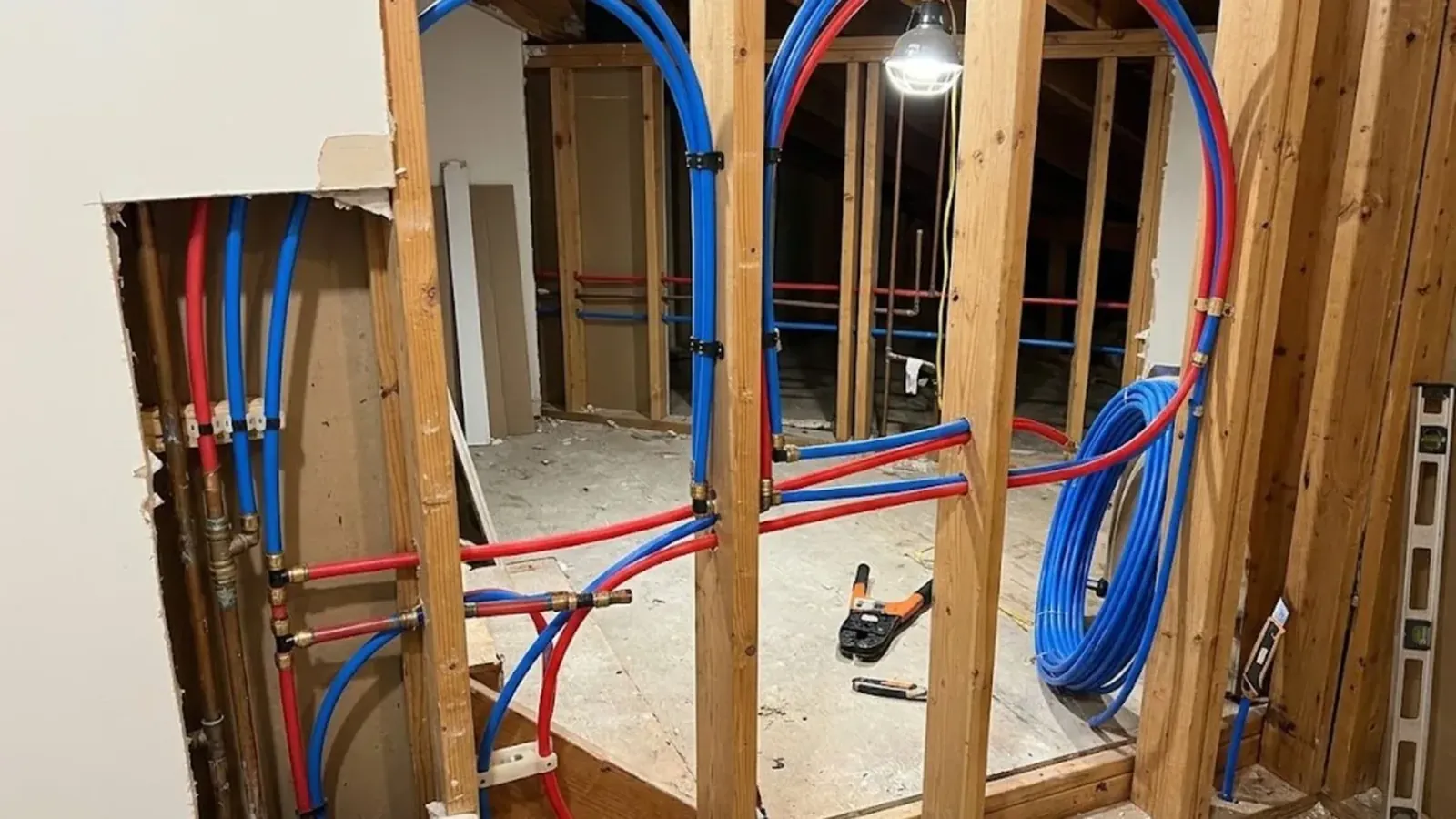
What PEX is
PEX is cross-linked polyethylene tubing. It comes in coils and in colors, red for hot, blue for cold, and it bends around corners instead of needing an elbow fitting at every turn. That cuts the number of joints in a system, and joints are where leaks start.
PEX connects with crimp rings, clamp rings or push-fit fittings, depending on the system. Installers can run it through walls and floors with fewer cuts than rigid pipe. It tolerates some freezing better than copper because it can expand, though a hard freeze can still split a fitting.
It has limits. Sunlight damages it, so it must not stay exposed outdoors. Some chemicals and petroleum products can permeate it. It should not be connected directly to a gas water heater flue or to a very hot source without the proper fittings.
PEX compared with copper
Both can last for decades when installed correctly.
| Factor | PEX | Copper |
|---|---|---|
| Installation | Faster, fewer fittings, flexible | Slower, soldered joints. |
| Material cost | Lower | Higher. |
| Corrosion | Does not corrode | Can pit in aggressive water. |
| Freeze tolerance | Better, but not freeze proof | Splits when frozen. |
| Sunlight | Must be protected | No issue. |
| Track record | Several decades of use | A century of use. |
| Appearance when exposed | Plastic look | Metal look. |
Signs your house may be ready for a repipe
A single leak does not justify a repipe. A pattern does.
- Repeat pinhole leaksA second or third leak in a year in different places.
- Rusty or brown waterEspecially on first use in the morning.
- Low pressure at several fixturesGalvanized pipe narrows from the inside.
- Old galvanized steelA magnet sticks to it, and it is gray and threaded.
- Visible corrosionGreen or white crust on exposed pipe and fittings.
If a pipe is leaking now, shut off the main and see burst pipe repair.
Local note: hard water, permits and the service line
The City of Inver Grove Heights lists local hardness at 20 to 22 grains. Scale builds in rigid metal pipe over time and reduces the inside diameter. PEX resists scale better than steel, which is one reason it is a common choice in hard-water areas. It does not remove the scale from your water heater, which still needs maintenance.
Plumbing work in the city goes through the Permits and Inspections office at 651-450-2550. A repipe normally needs a permit and an inspection. Also note that a repipe covers the pipes inside the house. The service line from the street is separate, and the city's materials inventory can tell you what yours is made of through the state's Lead Inventory Tracking Tool.
How a repipe is planned
A good repipe starts with a plan, not a truck.
- SurveyCount fixtures, trace the existing lines and decide the new routes.
- Choose the materialPEX is common, copper is a good choice if you prefer metal.
- Permit and scheduleConfirm the permit and plan water shutoff times.
- InstallRun new lines through basement ceilings and walls with small access cuts.
- TestPressure-test before closing the walls.
- Inspect and patchThe city inspects, then drywall openings are closed.
Costs, disruption and what to ask
The price of a repipe depends on the size of the house, number of fixtures, access and material. Open basements keep it down. Finished ceilings and plaster walls raise it. Ask what is included: permit, drywall patching, new shutoff valves, a new main valve and water heater connections.
Ask how many days the water will be off each day. A repipe in an average house takes a few days. Ask for a written schedule. Ask who handles the patching and painting. Most plumbers patch the access holes, and painting is yours.
Older homes in West St. Paul are common candidates. Newer homes in Rosemount, where the city lists water at 17 grains per gallon, usually already have PEX or copper and rarely need a full repipe. See repiping for our process.
Manifold or branch layout
PEX can be run in two common ways. A branch layout looks like a traditional system, with main lines and tees feeding fixtures. A manifold layout runs a separate line from a central manifold to each fixture, so a leak or a repair affects only one branch.
A manifold uses more tubing and takes more planning, but it can give steadier pressure when two fixtures run at once and lets you shut off one fixture without closing the whole house. Ask the plumber which layout is proposed and why.
Questions about warranties and fittings
Ask which brand of PEX and which fitting system will be used. Crimp, clamp and expansion systems are all in common use, and each has its own manufacturer warranty. Ask for the warranty terms in writing, and ask whether the installer is trained and certified on the system they will use.
Ask about the connection to the water heater and the main. These transitions use special fittings, and they are the spots where a poor job shows up first.
Insurance and resale
A repipe can matter to insurers. Some carriers ask about old galvanized or other aging pipe, and a documented repipe may help when you apply for coverage. Keep the permit record, the inspection sign-off and the warranty with your home papers.
At resale, buyers and inspectors look at the plumbing. New supply lines, with a clear record, remove a common worry. The value is hard to measure, but a documented repipe can shorten a negotiation.
Plan for water shutoff days
A repipe means the water is off for part of the day. Ask for the schedule in advance, fill a few containers and plan where family members will wash.
Guidelines worth knowing
The Minnesota Plumbing Code (Minnesota Rules chapter 4714, based on the Uniform Plumbing Code, UPC) lists the pipe materials approved for drinking water, so ask your contractor to confirm the PEX they plan to use qualifies.
Questions about repiping with PEX
PEX approved for potable water is widely used. Choose a product certified for drinking water use.
It tolerates freezing better than rigid pipe, but fittings can still fail. Keep pipes out of exterior walls where possible.
Yes, a plumbing permit and inspection are normally part of the job. Call Permits and Inspections at 651-450-2550.
New PEX can give a slight taste at first. Flushing the lines helps.
If the cause is narrowed galvanized pipe, yes. If the cause is the service line or a pressure regulator, no.
Need help with this in Inver Grove Heights?
Call the 24/7 line and describe what is happening.
Call (651) 946-0134