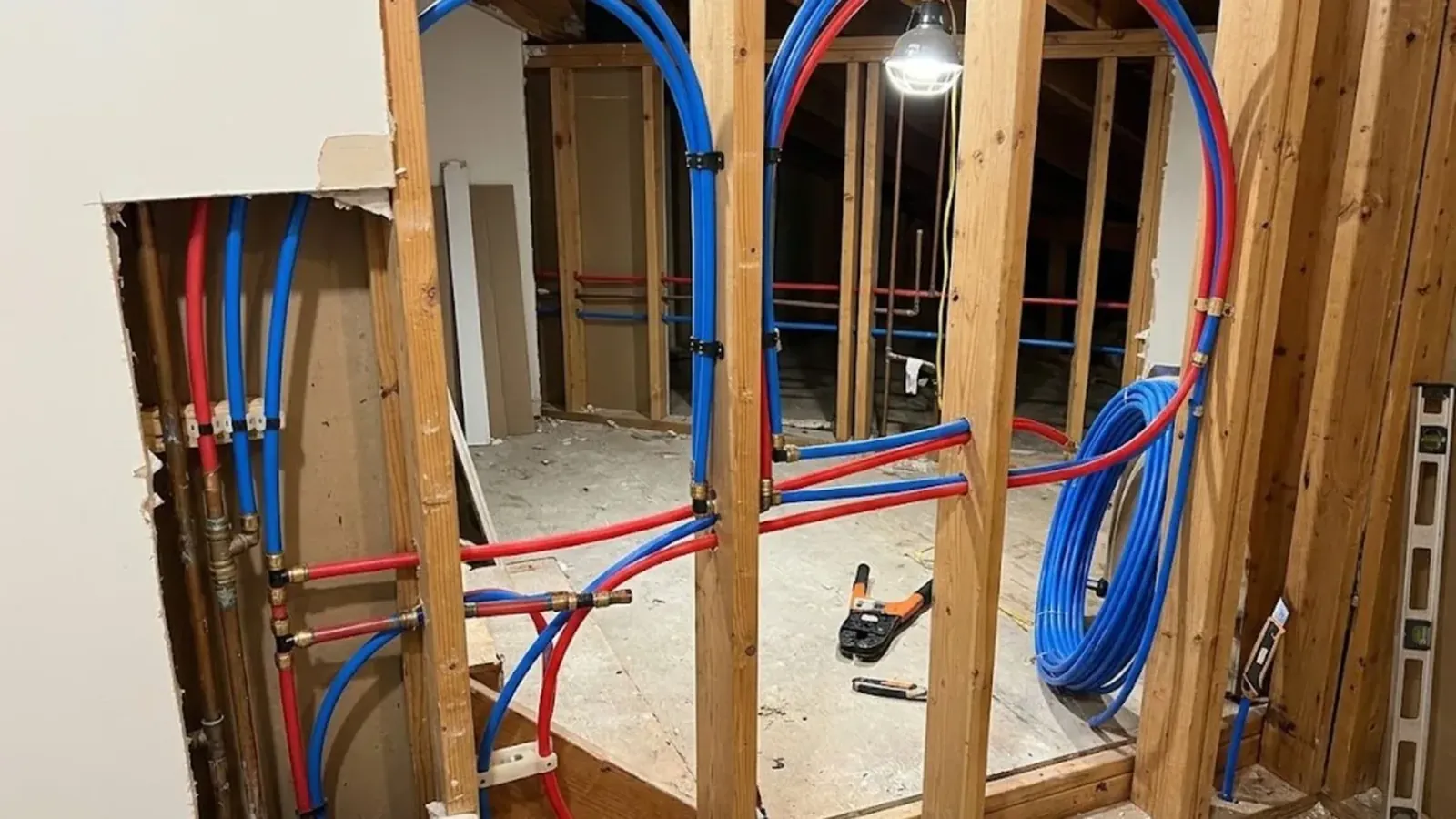
Repiping in Inver Grove Heights, MN
Repiping replaces the water supply pipes in a house. It does not touch the drains. In Inver Grove Heights, repiping is a planned project, and we offer same-day appointments when available for evaluations. The usual trigger is a pipe system that has stopped being worth patching.
One pinhole leak in a wall is a repair. A second one in a year, and a third after that, is a pattern. Old galvanized steel corrodes from the inside and closes up, which cuts pressure and turns water brown. Early copper can develop pinholes. Some plastic systems from past decades are known to fail at fittings.
A good repipe plan starts with finding out what you have and what condition it is in.
Signs it is time to repipe
Look for repeat leaks in different parts of the house, low pressure at several fixtures, rusty or discolored water when you first turn on a tap, and visible green or white crust on exposed pipe. Galvanized pipe is magnetic and gray. A magnet that sticks to a pipe near the meter is a clue.
Pressure that falls when two fixtures run at once points to narrowed pipe. Water that smells like metal and runs clear after a minute is another hint.
None of these is an emergency by itself. A burst pipe is. If a pipe has failed and water is flowing, see burst pipe repair and shut off the main valve.
Pipe material options
Each material has trade-offs.
| Material | Strengths | Watch for |
|---|---|---|
| PEX | Flexible, fewer fittings, resists freeze splits better than rigid pipe | Must be protected from sunlight and some chemicals. |
| Copper | Long track record, fire resistant | Higher material cost, can pit in aggressive water. |
| CPVC | Lower cost, resists scale | More brittle, requires many fittings. |
| Galvanized steel | Found in older homes | Corrodes inside, not used for new work. |
Hard water at 20 to 22 grains, as the City of Inver Grove Heights lists it, forms scale in all rigid pipes over time. PEX resists scale buildup better than steel, which is one reason it is the common choice for a repipe.
How a repipe goes
A whole-house repipe is organized to keep the house usable.
- Evaluation and planWe trace the existing lines, note fixtures and plan the new routes.
- PermitPlumbing work goes through the city's permit and inspection process, which we handle.
- Rough-inNew lines are run through basement, crawlspace or walls with small access cuts.
- Connect and testFixtures are reconnected and the system is pressure-tested.
- Inspection and patchThe city inspects, then drywall openings are closed. Painting is separate.
How to prepare
A little preparation shortens the project.
- Clear accessMove items from the basement, utility room and under sinks.
- Plan for water shutoffWater is off for part of each day.
- Decide on fixturesReplacing old shutoff valves and fixtures during the repipe saves later work.
- Ask about drywallAccess holes are patched, but paint matching is yours or a painter's.
- Check insuranceGradual leaks are usually not covered. Sudden bursts may be.
What decides the repipe price
We give a clear price before work starts.
Call for your real number: (651) 946-0134.
Living through a repipe
Plan for the water to be off for part of each working day. Fill a few containers for drinking and flushing, and keep a day's worth of cooking water. We aim to restore water at the end of each day when possible, so you can shower and cook in the evening.
Clear the areas where we will work: basement ceilings, utility rooms and the cabinets under sinks. Move pets to a quiet room. Tell us about finished walls you want to protect so we can choose where to place access cuts.
After the repipe, run each faucet for a few minutes to clear air and debris, and clean the aerators. Check pressure at the farthest fixture. Keep the pressure test results and the inspection sign-off with your home records.
Code and permits
Supply piping is governed by the Minnesota Plumbing Code, Minnesota Rules chapter 4714, which is built on the Uniform Plumbing Code (UPC). The code lists which pipe materials are approved for potable water. Ask your plumber to name the pipe and fittings they plan to use and to confirm they are approved for drinking water in Minnesota.
What to do before we arrive
- Shut off the main water valve if a pipe is actively leaking.
- Clear access to the water heater, the meter and the walls where pipes run.
- Photograph stained ceilings and walls, and note low-pressure fixtures.
- Plan a place for pets and children while the water is off.
Repiping questions
If leaks are isolated and the pipe is otherwise sound, repair. If leaks repeat and pipe is old steel or early copper, a repipe is likely cheaper over time.
PEX is a common choice because it is flexible and resists scale. Some owners prefer copper. We explain both for your house.
Often a few days for an average house, depending on size and access. We give a schedule with the quote.
Water is shut off during parts of each day, and we restore it at the end of the day when possible.
Yes. See West St. Paul, where older homes are common, and Rosemount.
We usually replace the connections at the water heater and the main shutoff during a repipe, because those are the oldest valves in the house. See water heater installation if the heater is due as well.