Start with the camera
No one should replace a sewer line without seeing it. A camera inspection records the condition of the pipe and shows where the damage is, how long the damaged section runs and what material the pipe is. Without it, any recommendation is a guess.
Ask for the video and a note of the distance from the cleanout to each defect. Ask for the pipe type, diameter and approximate depth. With that information, you can get two or three quotes for the same job.
If a contractor recommends a full replacement and will not show you the video, get a second opinion. See our sewer inspection page for what the camera work includes.
The four repair methods compared
Each method suits a different problem.
| Method | Best for | Limits |
|---|---|---|
| Spot repair | One localized break, offset or crushed section | Does not fix other weak spots in the same pipe. |
| Cured-in-place lining | Long runs with multiple cracks, root entry or rough pipe | Pipe must be round and not collapsed, reduces diameter slightly. |
| Pipe bursting | Replacing an old pipe along the same path | Needs entry and exit pits, depends on soil and nearby utilities. |
| Trench replacement | Collapsed lines, deep bellies, major rerouting | Most disruptive to the yard and surfaces. |
How to choose
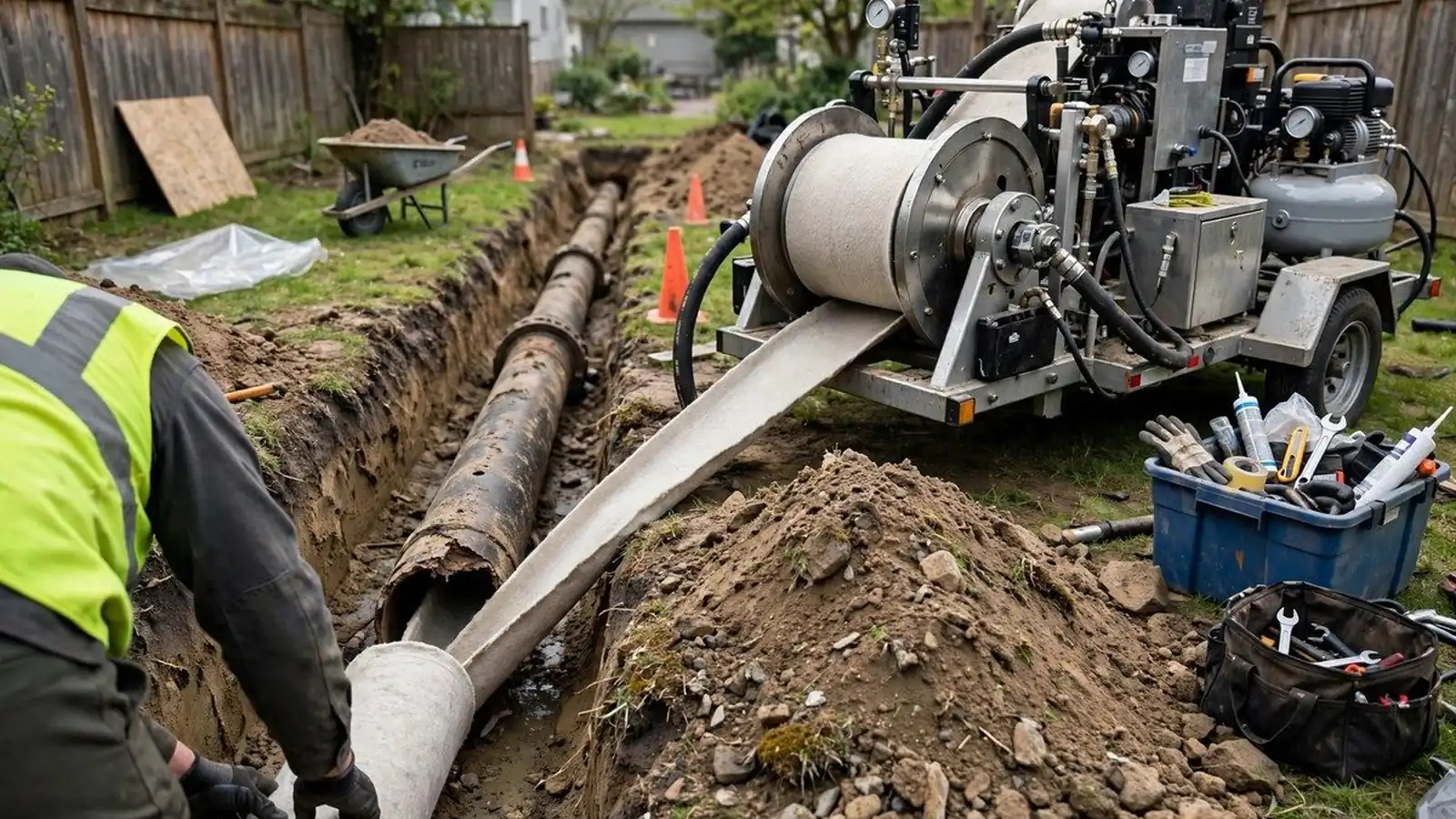
Start with the problem, not the method. A single cracked joint calls for a spot repair. A pipe that is root-filled at every joint over a long run suggests lining or replacement. A belly that holds water usually requires replacing that section, because lining follows the pipe's shape and keeps the belly.
Think about what sits above the pipe. A line under a driveway, a patio or a mature tree favors trenchless methods. A line under open lawn may be cheaper to dig. Think about the age of the rest of the pipe, because a spot repair on a pipe that is failing everywhere is a short-term answer.
Ask about warranties on workmanship and materials, and get them in writing.
Local note: permits, locates and the city
Plumbing work in Inver Grove Heights goes through the city's Permits and Inspections office, which is at 651-450-2550. Ask what a sewer line repair or replacement requires and whether an inspection is needed before backfill.
Before any dig, call 811 for a free utility locate. The City of Inver Grove Heights lists Utility Maintenance at 651-450-4309 for city water and sewer maintenance. If your lateral connects to a city main and you suspect the problem is at the connection, ask the city who is responsible for that section.
Questions to ask every contractor
Use the same list with each quote.
- Can I see the video?You should see every defect you are paying to fix.
- What method and why?A clear reason beats a sales line.
- What is included?Permit, locates, restoration, a final camera check.
- What happens if you find something new?Ask how changes are priced.
- What is the warranty?Get it in writing.
After the repair
Run a final camera pass after the work if the contractor did not already. It confirms that joints are tight and the flow is smooth. Keep the video with your home records. It helps with insurance and resale.
Make sure restoration is clear in the agreement. Sod, gravel, concrete and asphalt are each different jobs. In winter, frozen ground can force a temporary patch until spring.
If you live in Eagan or West St. Paul, we cover both. Older neighborhoods with clay laterals are the most common candidates for lining or replacement, and we explain the choice on our sewer line repair page.
Planning around the seasons
Spring and fall are the easiest seasons for a dig. Frozen ground in winter slows excavation, and wet ground in spring can make trenches unstable. If the line works but is damaged, it may be wise to schedule the repair for a dry season instead of waiting for an emergency in January.
If the line has failed completely, do not wait. Raw sewage backing up is a health issue, and a temporary fix can hold until the weather allows a full repair. Ask the contractor what temporary options exist and what they cost.
What to expect during the work
A spot repair is often finished in a day. Lining and bursting take a day or two, plus time to set up. A full trench replacement can take several days, depending on length and depth. Expect noise, equipment in the yard and a stretch when the house has no sewer service.
Plan for water use. During the work you may be asked to avoid running water, and you may need a temporary alternative for toilets. Ask the contractor for a day by day schedule, and ask how they will protect your lawn, driveway and landscaping.
Trees, roots and the route of the pipe
Large trees are a common reason sewer lines fail. Roots seek moisture and slip into joints. If the camera shows roots in several joints, ask whether the repair addresses them, such as a liner that seals the joints or a new pipe with tight joints.
Ask where the line runs relative to trees and whether replanting is wise. A tree that has already damaged one line will damage a replacement line if its roots can reach the joints.
Before the crew arrives
Move vehicles and lawn items away from the work area, and tell the crew about sprinkler lines, fences and shrubs that you want to keep. Call Gopher State One Call at 811 before any digging so buried utilities are marked.
Set up an alternate bathroom plan. Sewer work can leave the house without drains for part of a day, so ask how long that will be and when you can use the plumbing again.
After the work, ask for the camera footage or a written note of what was found. The record helps with permits, with resale and with the next owner.
Guidelines worth knowing
Sewer replacement follows the Minnesota Plumbing Code (Minnesota Rules chapter 4714, based on the Uniform Plumbing Code, UPC), which covers slope, cleanouts and approved pipe.
Questions about sewer line replacement
It depends on the material. Clay and cast iron can last many decades. Plastic can last longer if properly bedded.
Yes. A liner is designed to be cleaned, though cutting heads should be matched to the liner.
Often, yes. Call Permits and Inspections at 651-450-2550 to confirm.
The city. Call Utility Maintenance at 651-450-4309 to ask where the responsibility ends.
Often, but frozen ground slows the work and may delay restoration.
Need help with this in Inver Grove Heights?
Call the 24/7 line and describe what is happening.
Call (651) 946-0134