Basement waterproofing in Inver Grove Heights, MN
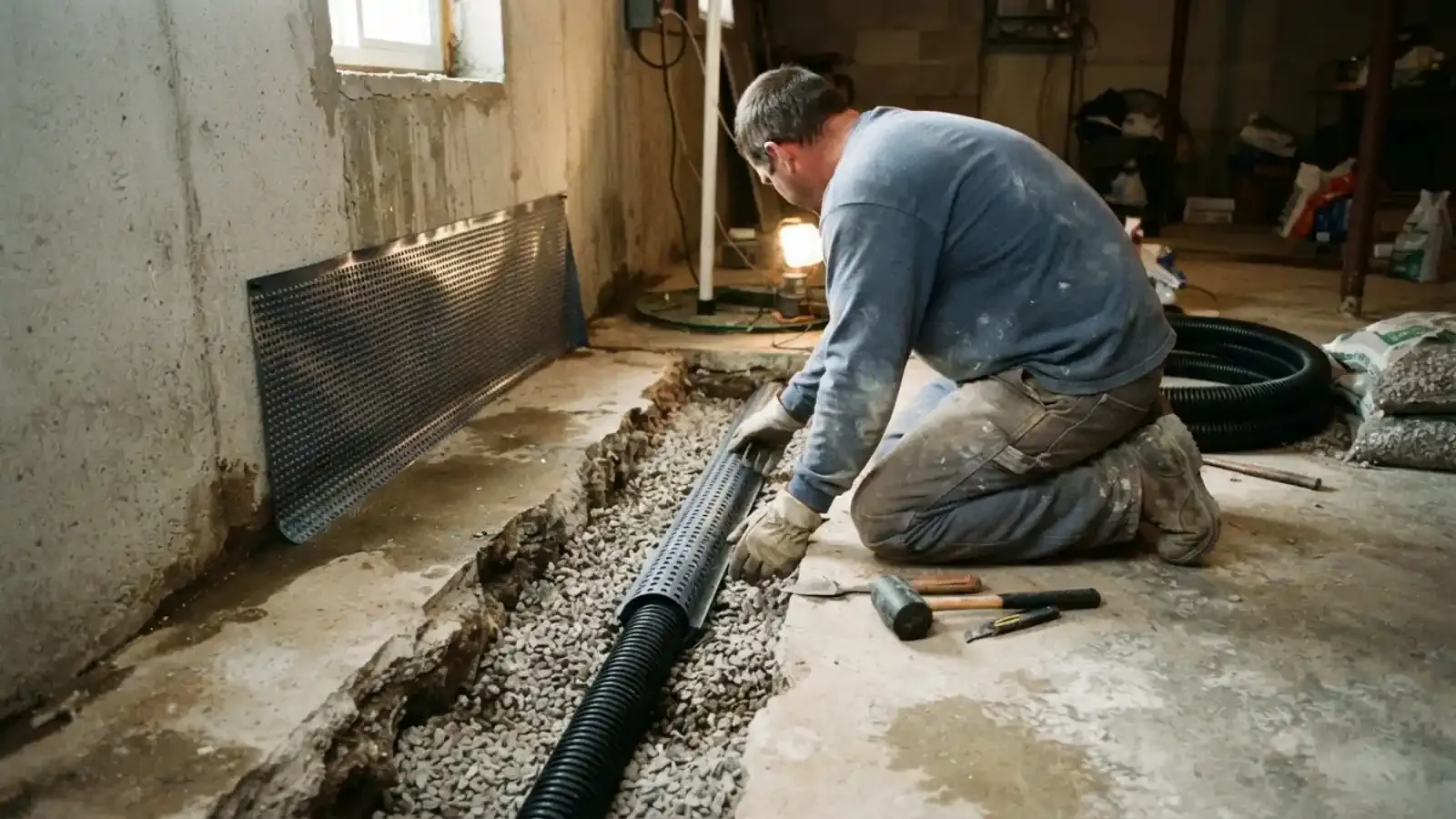
Basement waterproofing in Inver Grove Heights means controlling where water goes once it reaches the foundation. The usual plumbing-side solution is interior drainage: a channel along the footing that collects water and sends it to a sump pit and pump. It is scheduled work, and we offer same-day appointments when available for evaluations.
Start by learning where the water enters. Seepage at the base of the wall, a wet floor crack, a leaking window well, or condensation on cold walls all look similar from a distance and have different fixes.
We look at the whole path of the water: the grading outside, the gutters and downspouts, the wall, the floor joint and the sump.
Fix the outside first
The cheapest waterproofing happens outside. Downspouts that dump next to the foundation, soil that slopes toward the house, and clogged gutters put gallons against the wall every storm. Extend downspouts several feet from the house and regrade where you can.
If water still enters after the outside is addressed, the inside needs a plan. A sump pump on its own is not waterproofing. It is the drain at the end of the system.
If water appears only during storms, it is likely surface water. If it appears in spring and stays, it is likely groundwater. Each calls for a different mix of fixes.
Waterproofing options
Each approach addresses a different path.
| Option | What it does | Best for |
|---|---|---|
| Gutter and grading fixes | Moves roof and surface water away | First step for most homes. |
| Interior drain tile with sump | Collects water at the footing and pumps it out | Seepage at the wall and floor joint. |
| Sump pit and pump | Removes collected water | Any basement with a high water table. |
| Crack repair | Seals individual leaking cracks | Isolated cracks, not a full solution. |
| Window well drains | Keeps well water from entering | Wells that fill in storms. |
What to note before the visit
These details help us find the path.
- When it leaksDuring storms, after thaw, or all the time.
- Where it leaksWall, floor crack, corner, window or floor drain.
- Past repairsEarlier sealing or pumping.
- Finished spacesCarpet and drywall may need to be opened.
- Mold or odorA musty smell means moisture has been present for a while.
We do not make health claims about mold exposure. For health concerns, talk to your physician.
Local conditions that matter
Groundwater rises in spring and after heavy rain. Older homes may have footing drains that are clogged or missing. Newer homes may have drain tile that is intact but dumps into a pit with an undersized pump.
Interior systems that discharge into a sump pit need a pump that works in winter. Discharge lines that freeze are a recurring failure. See sump pump repair for the maintenance that keeps them running.
Part of the city is on septic. Do not tie sump or drain tile discharge into a septic system.
What decides the waterproofing price
We give a clear price before work starts. Prices depend on the factors below.
Call for your real number: (651) 946-0134.
The first hour when water is already coming in
If water is entering now, the goal is to limit damage, not to fix the cause. Lift boxes, rugs and furniture off the floor. Keep electronics and cords out of the water, and do not stand in water near outlets or the panel. If you have a sump pump, check that it is running and that the discharge outlet outside is clear.
A wet-dry vacuum or a utility pump moves standing water faster than towels. Photograph the water line and the wet areas before cleanup, because your insurer may ask. Run fans and a dehumidifier once the standing water is gone, and pull up wet carpet pad quickly.
Then note where the water came from: a wall, a floor crack, a window well or the floor drain. That one detail saves time at the evaluation.
What to do before we arrive
- Move boxes, furniture and electronics away from the wet area.
- Do not touch outlets or cords near standing water, and shut off power to that area only if the breaker is dry and easy to reach.
- Take photos of the water line and the entry points for your records.
- Do not use bleach and ammonia cleaners together while you clean up.
Standards and local rules
Drain tile, sump pits and discharge lines fall under the Minnesota Plumbing Code (Minnesota Rules chapter 4714, based on the Uniform Plumbing Code, UPC), and some work needs a permit. Ask for the discharge location in writing, because sump water should not go into the sanitary sewer.
Basement waterproofing questions
It depends on the system, the length of wall, access and finish. We price by the linear foot of drain tile plus the pump. Call for your real number.
Only if there is drain tile to feed it. A pump removes water that reaches the pit.
Yes, with drains or sealing.
Often a few days, depending on length and access.
Yes, but that is sewer water. See sewer line cleaning.
Yes. See West St. Paul and Mendota Heights.